Smooth Council Approvals
Avoid costly planning delays with comprehensive, council-ready development tree reports.
Comprehensive AQF Level 5 consulting arborist reports for council, development, and risk management.
Supplying expert consulting arborist reports across Norville and Bundaberg.
When formal documentation is required by councils, certifiers, or insurers, our arborist report Norville service delivers detailed, scientifically grounded tree assessments from an AQF Level 5 consulting arborist.
While most urban Norville house blocks do not carry blanket tree protections, home extensions, shed builds, and works triggering council planning approvals often require formal AS4970 tree impact assessments, especially when building near mature boundary trees.
Avoid costly planning delays with comprehensive, council-ready development tree reports.
Understand the true structural health and remaining safe useful life expectancy (SULE) of your trees.
Secure certified written evidence for insurance claims, neighbour negotiations, or liability defence.
Our AQF Level 5 arborist visits your Norville site to inspect tree vitality, structure, roots, and defects.
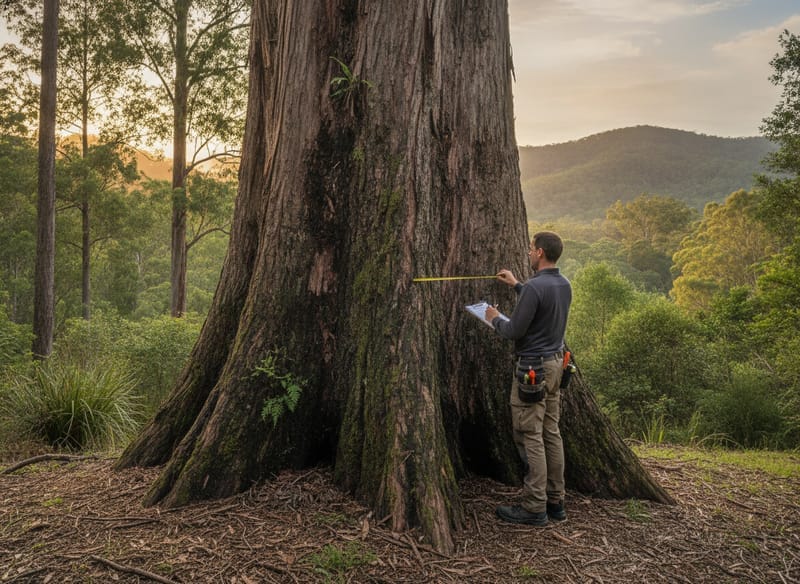
We measure trunk diameter at breast height (DBH), height, canopy spread, and calculate TPZ/SRZ offsets.
We compile findings into a structured written report complete with high-resolution photos and recommendations.
We deliver the completed document and explain the findings to assist your application or project.
If you are planning a development, managing a large property, or resolving a tree dispute in the local area, securing a professional Arborist Report Norville is your crucial first step.
Our team of AQF Level 5 consulting arborists provides comprehensive, council-approved documentation for homeowners, builders, and developers across Norville, Avoca, Avenell Heights, and the wider Bundaberg region.
Whether you are navigating the Bundaberg Regional Council Planning Scheme for a new build, mapping out tree protection zones, or documenting storm damage following the recent March 2026 Burnett River floods, we deliver the exact technical reporting you need. Trees like mature Moreton Bay Figs, massive backyard Mangoes, and towering Hoop Pines often require formal assessment before a single chainsaw is fired up. We ensure your project stays compliant, safe, and on schedule.
When it comes to council approvals and development applications, a quick look from a general tree lopper or a builder simply will not cut it. Bundaberg Regional Council strictly requires formal documentation from an AQF Level 5 consulting arborist for any works involving protected overlays or development sites. Submitting a DA without a proper tree inventory or an AS4970-compliant Tree Protection Plan usually results in immediate council knockbacks, costing you months of project delays and thousands in holding costs. Furthermore, if you act on an unqualified assessment to remove a seemingly dangerous tree inside a mapped Biodiversity areas overlay, you run the risk of massive fines and legal action under the local planning scheme. Our team solves this by providing authoritative, legally sound documentation. We conduct thorough Visual Tree Assessments (VTA) and calculate precise Structural Root Zones (SRZ) to ensure your plans align with both local regulations and the physical realities of the trees on your block. With a detailed, professional report in hand, you can proceed with absolute confidence.
We produce a range of highly detailed, formal reports tailored to the specific regulatory requirements of your property and project.
Required by Bundaberg Regional Council when your DA proposes works near established trees. We provide a full tree inventory, species identification, DBH (Diameter at Breast Height) measurements, SULE ratings, and retention recommendations.
Essential for construction sites. We map out the Tree Protection Zone (TPZ) and Structural Root Zone (SRZ), detailing the fencing, root mapping, and supervised work zones required to keep retained trees viable during your build.
Utilising Visual Tree Assessment (VTA) methodology, we document structural defects, target zones, and the likelihood of failure. This is highly requested for older Jacaranda and Poinciana trees near structures, or for strata duty-of-care.
When council approval is mandatory under a local overlay, we document the tree's poor condition, hazard potential, and valid justification for removal, alongside any required replanting strategies.
Securing an Arborist Report Norville begins with a simple consultation. When you contact us, we first discuss your specific project goals and check the Bundaberg Regional Council online mapping to identify any relevant protections, such as the Biodiversity areas overlay code or the Heritage and neighbourhood character overlay. Next, our consulting arborist visits your site. We conduct hands-on inspections, measure trunk diameters at breast height (DBH), assess canopy health, and evaluate the soil and root environments. For development sites, we map out the exact distances required for your building footprint to safely avoid critical root zones. We then return to the office to draft your formal document. This involves compiling our field data, overlaying it with your site plans, and structuring the report to directly address council criteria. Finally, we deliver a polished, signed PDF report ready for immediate submission to your private certifier, builder, or the local council.
Every report our AQF Level 5 consulting arborists produce is anchored in rigorous national standards. Our development reporting strictly follows AS4970 - Protection of Trees on Development Sites, while any pruning recommendations conform to AS4373 - Pruning of Amenity Trees, strictly prohibiting harmful practices like lopping.
Our business is fully covered with comprehensive public liability and professional indemnity insurance, ensuring our consulting advice is fully backed. We also carry complete WorkCover for all our staff, giving you absolute peace of mind when we step onto your Norville property.
Norville is a classic post-war brick suburb characterised by generous blocks and large, established backyard trees. Because the terrain sits on the relatively flat Burnett flood plain, site access is rarely our main hurdle. Instead, the challenge often lies in managing sprawling Mango trees, mature Queensland Blue Gums, and large Umbrella Trees planted decades ago, which are now encroaching on modern extensions or overhead powerlines.
While Norville itself is largely free of the Coastal protection overlay seen in Bargara, properties here can still trigger the Biodiversity areas overlay code if situated near local creeks or parks. Additionally, the extreme weather patterns of our subtropical climate mean we frequently assess trees for storm resilience. Following the March 2026 Burnett River flood disaster, our reports have been critical in helping residents document hazardous trees to legitimately utilise the current state disaster clearing exemption.
Once we supply your final PDF report, it is ready to be submitted directly to Bundaberg Regional Council or handed over to your private certifier. If the report outlines a Tree Protection Plan, you must ensure your builder installs the specified protective fencing before any heavy machinery enters the site.
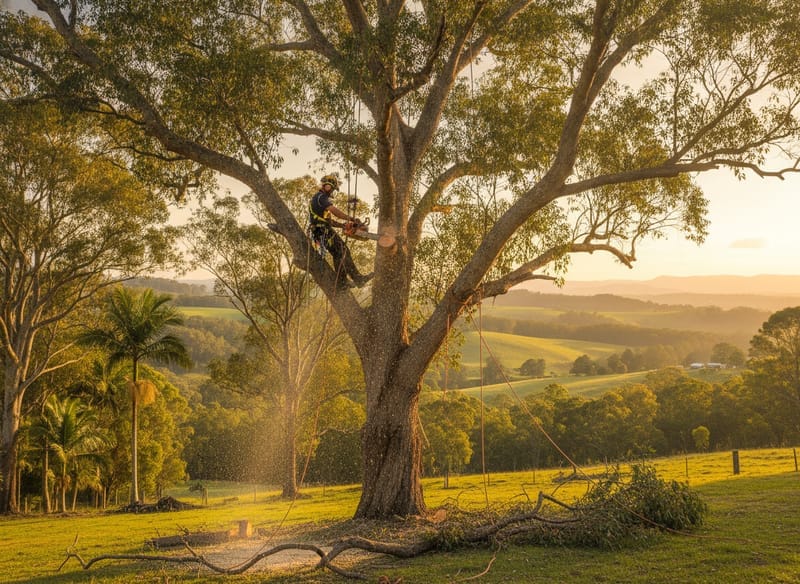
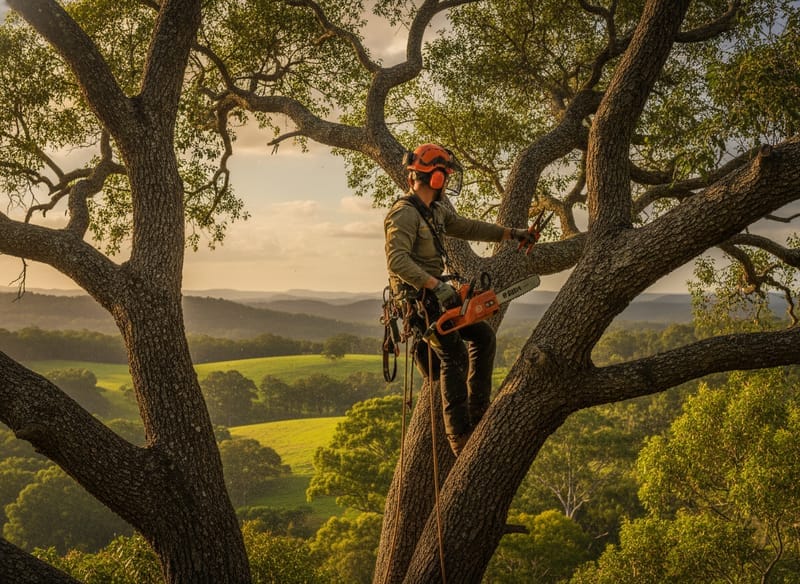
When council approval is granted and physical tree work is green-lit, call us back. Our AQF Level 3 climbing arborists can execute any required pruning or removals precisely as outlined in the report, ensuring full compliance from the initial assessment through to the final site cleanup.
Arborist reports are priced based on the number of trees assessed, the required report type, and site complexity.
We provide fixed-price quotes for all consulting arborist assessments in Norville.
We provide AQF Level 5 consulting arborist reports across Norville and the Bundaberg region.
Contact our consulting arborists for professional tree assessments and development reports.
Request a Consultation