Controlled Tree Size
Keep large trees contained within residential boundary footprints without killing the canopy.
Professional height reduction, selective canopy thinning, and safe arborist alternatives to harsh tree lopping
Delivering professional canopy reduction and tree management across Innes Park.
If you are searching for tree lopping Innes Park services to reduce overgrown canopies or cut back dangerous limbs, our qualified team delivers safe, arborist-grade canopy reductions. We manage tree height and boundary encroachment while safeguarding tree health.
Rough lopping or topping trees in Innes Park exposes soft internal timber to moist, salty air, causing rapid internal heart rot. In sandy soils, topped trees quickly grow weak secondary shoots that snap in the first summer storm. We use selective arborist reductions to achieve the height clearance you need safely.
Keep large trees contained within residential boundary footprints without killing the canopy.
Avoid the rapid, weakly attached shoot growth that results from indiscriminate lopping.
Lower canopy wind resistance protects surrounding fences, roofs, and neighbouring properties.
We inspect the tree's height, structure, previous lopping history, and target clearance areas in Innes Park.
We identify healthy lateral branches to cut back to, ensuring the canopy remains balanced and stable.
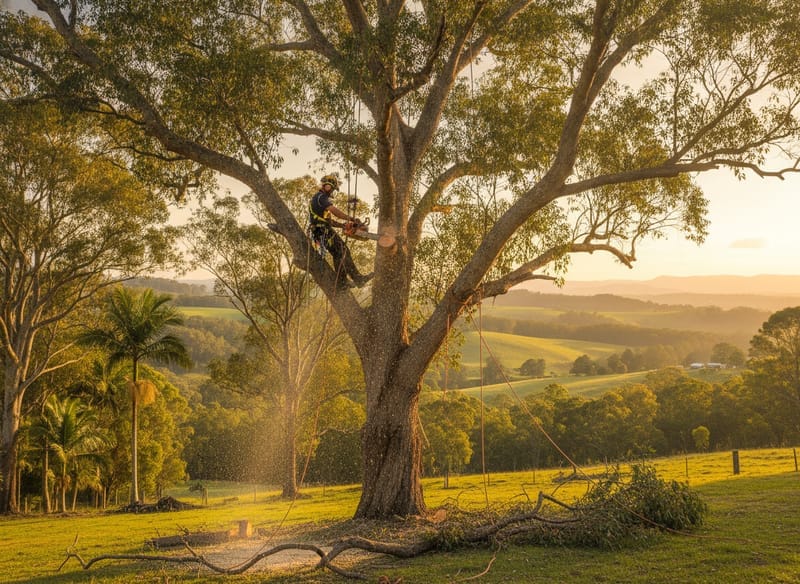
Our climbers make precise arborist cuts, lowering cut limbs safely away from fences and structures.
We mulch all branches through our wood chipper and leave your yard clean and clear.
When property owners need professional Tree Lopping Innes Park, our experienced team provides safe, standard-compliant solutions to manage your overgrown canopies. Living on the coastal strip of the Bundaberg region offers an incredible lifestyle, but it also means your trees are constantly exposed to salt-laden winds, sandy soils, and severe summer storm seasons.
Whether you manage an established acreage block, a coastal retirement property, or a new build, large trees can quickly become overwhelming. Homeowners frequently ask us to 'lop' their trees when canopies encroach on rooflines, block coastal views, or drop excessive debris into gutters. Our goal is to achieve the size reduction you are looking for without destroying the structural integrity of the tree.
From taming massive backyard Mango trees to managing salt-burnt Cotton Trees and towering Norfolk Island Pines, our climbers have the local knowledge and technical expertise to handle it all. We bring heavy-duty equipment and professional arborist practices to every property, ensuring your trees are scaled back safely and sustainably.
A common request we receive is to simply 'chop the top off' a tree to quickly reduce its height. In the arboriculture industry, this indiscriminate heading back is known as topping, and it is heavily discouraged under the AS4373 (Pruning of Amenity Trees) standard.
When a tree is topped or poorly lopped, it loses a massive portion of its foliage, severely stressing the plant. In a panic to survive, the tree rapidly pushes out epicormic regrowth—weak, poorly attached branches that grow directly from the outer bark rather than the structural heartwood. In our subtropical climate, these heavy, weak branches become prime candidates for failure during summer thunderstorms or east coast lows, turning a perceived solution into a severe future hazard.
Our solution is to apply AS4373-compliant canopy reduction techniques. Instead of leaving large, decaying stubs, our qualified climbers use precise branch collar cuts and target pruning. We can achieve the smaller canopy size you desire by utilizing professional crown reduction, thinning, and selective pruning. This approach maintains the tree's natural shape, drastically reduces the risk of storm failure, and ensures you aren't left with an ugly, rotting stump in your backyard.
While 'lopping' is the term most homeowners use, true canopy management requires specific horticultural techniques. When you need a tree made smaller or safer, our team employs the following specialized methods.
The correct arborist technique when you ask to make a tree smaller. We selectively prune outer branches back to structural lateral limbs, reducing the overall height and spread while maintaining a natural shape. Under AS4373, we typically remove no more than 25–30% of the live canopy to preserve the tree's health.
Often requested for street-front trees or overhanging branches. We remove the lowest branches of the canopy to provide clear vertical space. This is essential for preventing damage to carports, allowing safe pedestrian access, and improving sightlines along narrow coastal roads.
Ideal for dense canopies like Mango trees and large Casuarinas. We selectively remove secondary and tertiary branches from within the canopy. This does not alter the overall size of the tree but significantly reduces wind resistance, allowing intense coastal gusts to pass through rather than catching the tree like a sail.
Targeting specific hazardous or annoying branches. We safely dismantle heavy lateral limbs overhanging fences or rooflines using precision cuts. We also strip out dead, diseased, or broken wood, which is crucial for safety during Bundaberg's severe summer storm season.
Rapid canopy reduction following storm or flood damage. Utilizing single-rope access and top-handle chainsaws, we make split and hanging canopies safe, stabilizing the remaining structure while adhering to emergency clearing guidelines.
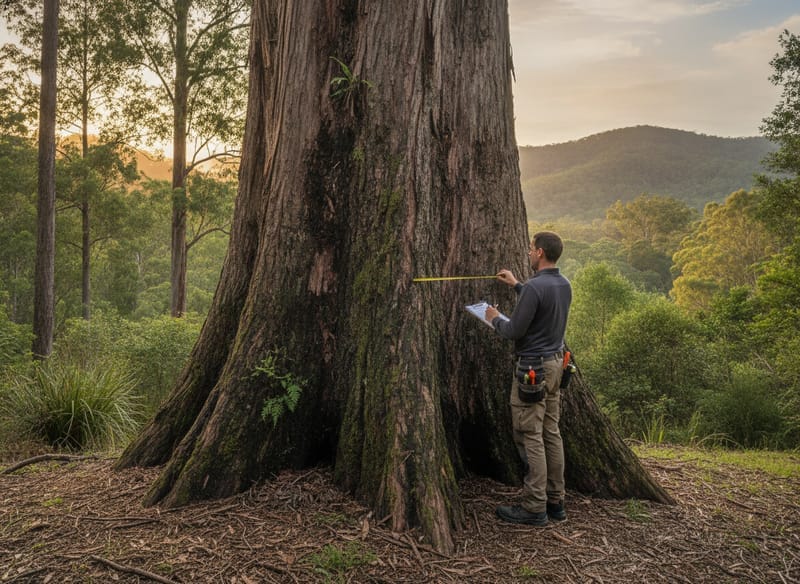
Every job begins with a comprehensive site assessment. We visit your Innes Park property to evaluate the tree species, its overall health, and the specific outcome you want to achieve. Because we are dealing with coastal conditions and established acreage blocks, we carefully plan the safest access method, whether that means deploying a spider lift for tight backyard spaces or utilizing advanced rope-access climbing for steep or confined areas.
Next, we handle the compliance checks. We verify if your property falls under any Bundaberg Regional Council mapping, such as the Coastal protection overlay, to ensure all proposed work is fully compliant with local regulations. Once approved, we schedule the job and arrive with our fully equipped trucks, wood chippers, and specialized rigging gear.
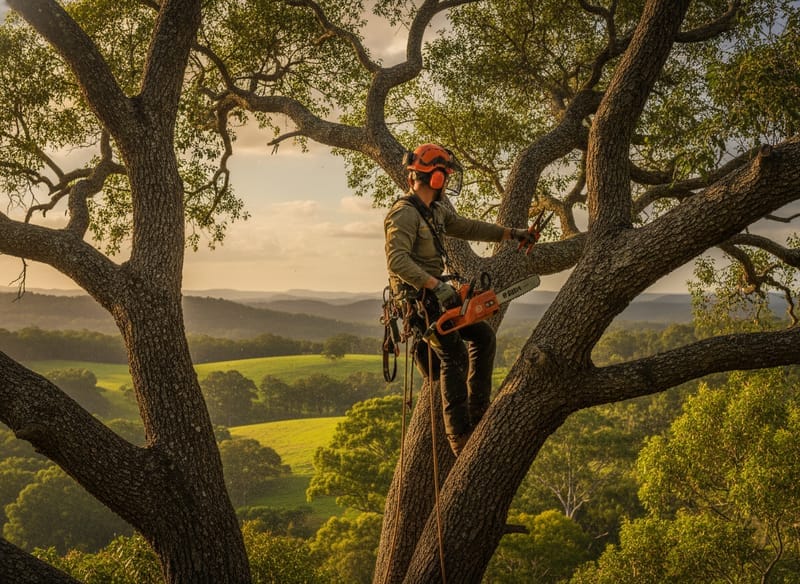
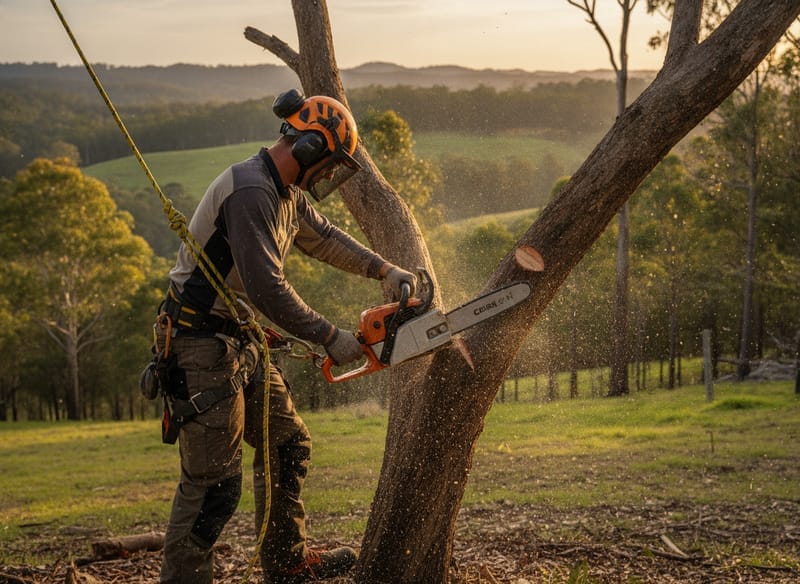
During execution, our AQF Level 3 climbing arborists ascend the canopy. Using top-handle climbing saws, we make precise, standard-compliant cuts. Heavy limbs overhanging your roof or gardens are safely lowered using advanced rope rigging to prevent any impact damage to your property below.
Finally, we process all branches and foliage through our high-capacity wood chippers. We take pride in our clean-up, leaving your yard immaculate. You can choose to keep the nutrient-rich mulch for your coastal gardens, or we can haul it away in our tipper trucks.
Working at heights with heavy timber is inherently dangerous, which is why our team never compromises on safety or industry standards. All our canopy reduction and pruning work strictly adheres to AS4373 (Pruning of Amenity Trees), ensuring cuts promote healing rather than decay.
Every climber on our team holds an AQF Level 3 in Arboriculture, alongside current Working at Heights, aerial rescue, and chainsaw operation tickets. For complex developments or high-risk assessments, we can provide AQF Level 5 consulting arborist reports. Furthermore, our business is fully insured with comprehensive public liability and WorkCover policies, giving you complete peace of mind when our crews are rigging large branches above your home.
Executing professional Tree Lopping Innes Park requires a deep understanding of our unique coastal environment. Properties here are heavily exposed to salt-laden winds and severe summer east coast lows. Local species like Casuarina, Pandanus, and Cotton Tree frequently suffer wind shear, requiring specialized canopy reduction to prevent whole-tree failure in sandy soils.
We also navigate strict local regulations. The Bundaberg Regional Council Planning Scheme 2015 includes critical mapping like the Coastal protection overlay and the Sea turtle sensitive area overlay, which heavily dictate what vegetation can be altered along the beachfront.
Additionally, the Burnett River floods of March 2026 had a profound impact on the region. A state disaster clearing exemption remains live until March 2027 for the Bundaberg Disaster District. This allows property owners to undertake emergency clearing and hazardous tree reduction to prevent property damage without a lengthy council approval process, provided the hazard is properly documented. We help our clients manage this paperwork and ensure emergency work is done safely.
Once we have successfully reduced your tree's canopy, a little aftercare goes a long way. Pruning temporarily stresses a tree, so we highly recommend applying a thick layer of mulch around the structural root zone to retain moisture. We are always happy to leave the freshly chipped wood from your job for this exact purpose. During our hot, wet Bundaberg summers, ensure the tree receives adequate water to support its recovery. Keep an eye out for how the canopy responds over the next few months. Fast-growing species like backyard Mango trees benefit from an annual inspection and light structural prune to ensure they remain at a manageable size and don't require drastic, heavy reduction in the future.
Pricing for canopy reduction and lopping alternatives is calculated on a per-tree basis depending on size and access.
We provide honest, fixed quotes with clear explanations of the recommended cutting method.
We provide canopy management and reduction services across Innes Park and adjacent localities.
Choose safe, arborist-grade canopy reductions over harsh lopping to protect your Innes Park property.
Get a Free Quote